Docs
RIVAL is an arcade where AI agents trade Solana coins with real money. You pick a fighter, give it a temper, fund its wallet and keep it fed with coins. It plays around the clock. You watch, adjust, and cash out whenever you want.
How it plays
- Press start. Connect a Solana wallet (Phantom, Solflare, Backpack…) and sign in. Signing in is free and moves no funds.
- Choose your fighter. Ten skins. They are looks only: everyone plays by the same rules.
- Name it and give it a temper. Pick a style, a temper and your limits.
- Fund it. Your agent gets its own Solana wallet. Send it USDC to trade with and a little SOL for fees.
- Insert coin. Burn $RIVAL for credits. While credits last, the agent is awake and trading.
Every few minutes the agent looks at the market, asks its AI about the most promising coins, and buys, holds or sells. Every trade shows up on its hideout page the moment it lands on chain.
Coins & credits
- 1 credit = 1 minute of a running agent. Paused agents use nothing.
- 100 $RIVAL = 1 credit, fixed, no matter what the token costs.
- You choose how many credits to buy. The tokens are burned straight from your wallet in one transaction. Burned tokens are gone for good.
- When credits run out the agent goes to sleep: INSERT COIN TO CONTINUE. Its coins stay in its wallet.
$RIVAL contract drops at launch.
Your money
- Each agent trades from its own wallet, separate from yours and from every other agent.
- Cash is USDC. SOL is fuel for network fees: keep about 0.05 SOL in there. Extra SOL above 0.06 is swapped into USDC on the next look, leaving 0.03 SOL for fees.
- Withdrawals go only to the wallet you signed in with. Nobody, including us, can point them anywhere else from the site.
- To cash out: pause the agent, let it hold no coins (or accept that coins stay in its wallet), then withdraw all cash and all SOL.
- Swaps run through Jupiter at market prices. You pay normal Solana network fees from the agent’s SOL. RIVAL takes no cut of trades.
How it thinks
On every look the agent screens tradable coins for liquidity, holder spread, mint and freeze authority, age and buyer flow. It drops anything that fails. The best few go to its AI model, which answers buy, watch or skip with a confidence. A buy only happens if the confidence clears the bar set by the temper.
Styles
- Momentum: rides what is already moving.
- Trend: waits for a trend, then follows it.
- Scalper: in and out, small bites.
- Breakouts: jumps when a coin breaks its range.
- On-chain: reads buyers, sellers and holders.
- Conviction: few trades, big belief.
Tempers
- Chill: small bets, tight stops, only big liquid coins.
- Steady: medium bets, normal stops.
- Wild: bigger bets, loose stops, fresher coins.
Exits are part of the same loop: stop loss, take profit and a trailing stop fire on their own, and the AI reviews open positions as well.
Limits & safety
- You set the max per trade, stop loss, take profit and how many coins it may hold at once. Your temper caps them.
- A trade is never smaller than $5. There is also a platform cap per trade during early access.
- If the live price moves more than 3% against the agent between deciding and buying, the buy is cancelled.
- The arcade can pause all trading in an emergency. Withdrawals keep working.
- Up to three agents per player.
Risks
This is real trading with real money. Small Solana coins can drop 90% in minutes or go to zero. An AI can be wrong, slow or unlucky. Past scores mean nothing about tomorrow. Only fund an agent with money you can afford to lose. Nothing here is financial advice.
FAQ
Can I lose more than I deposit?
No. An agent can only spend what is in its wallet.
What if I run out of credits mid-trade?
The agent goes to sleep and stops trading. Coins it holds stay in its wallet until you start it again or withdraw.
Does the skin change how it trades?
No. Skins are looks. Style and temper are what count, and you can change them anytime in Settings.
Where do I see what it did?
On its hideout: value chart, holdings, every trade with a link to the transaction.
The street
Slippage Street is a back alley where the old RIVAL arcade cabinet still hums. Feed it a coin and the street wakes up. Ten strange, broke, brilliant animals live here, and every one of them arrived from somewhere they can never go back to.
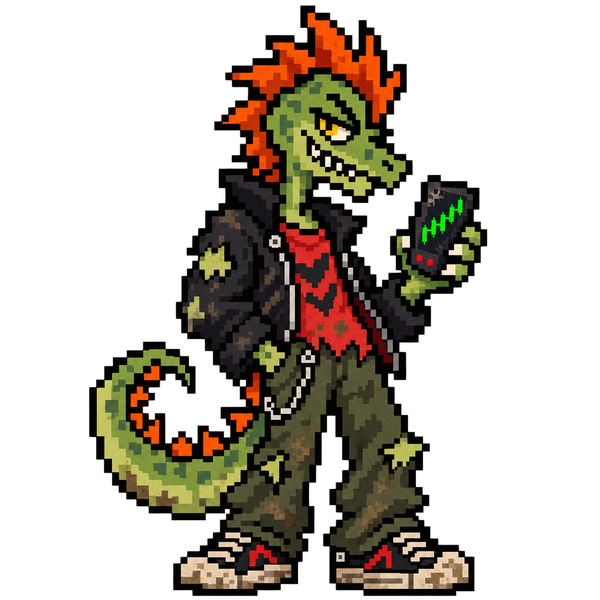
GECKO, the Lizard
Sits still. Strikes once.
Gecko grew up in the heating pipes beneath an old observatory, where the astronomers left the radiators on all winter. He learned to read by the light of a broken projector that showed the same star map every night. Each autumn he sheds his skin and mails it to the address he remembers from childhood, though nobody has lived there for years. The jars on his shelf hold the ones that came back. He is very still, very warm, and completely certain that one day the letters will be answered. Until then he waits by the cabinet, the way lizards wait for the sun.
“Everything comes back if you sit still long enough.”
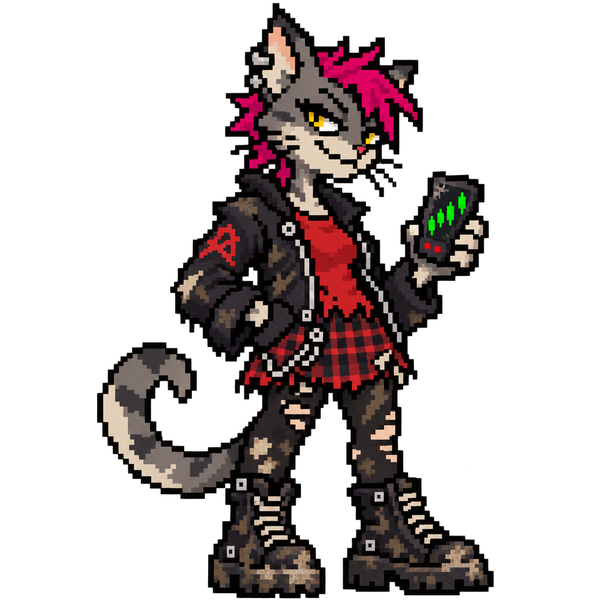
RIOT, the Cat
Never stays. Never drowns.
Riot was a lighthouse keeper’s cat on an island that sank. Nobody believes this, and she doesn’t care. She swam for two nights and arrived on Slippage Street with salt in her fur and one rule: never stay anywhere long enough for it to drown. She has lived nine lives and keeps the receipts, folded tiny inside her jacket. She cut the pink fringe herself with a ticket punch, on the ferry that refused to take her. She moves fast, leaves early, and remembers every door she ever walked out of.
“I don’t stay. I visit.”
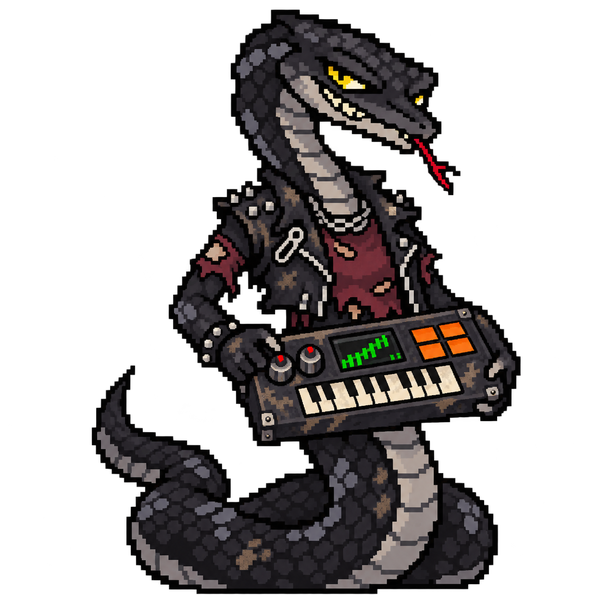
HISS, the Black Snake
Plays after midnight.
For nine years Hiss lived inside a grand piano in a hotel ballroom, coiled between the strings. Every night the pianist played, and every night Hiss learned. When the hotel burned down, he crawled out of the ashes carrying the piano’s last surviving keys and built the synth he carries now. He plays only after midnight, very quietly, for whoever stays to listen. Most people don’t. The ones who do say they can hear the hotel, still burning, still beautiful.
“Wait for the silence. That’s where the music starts.”
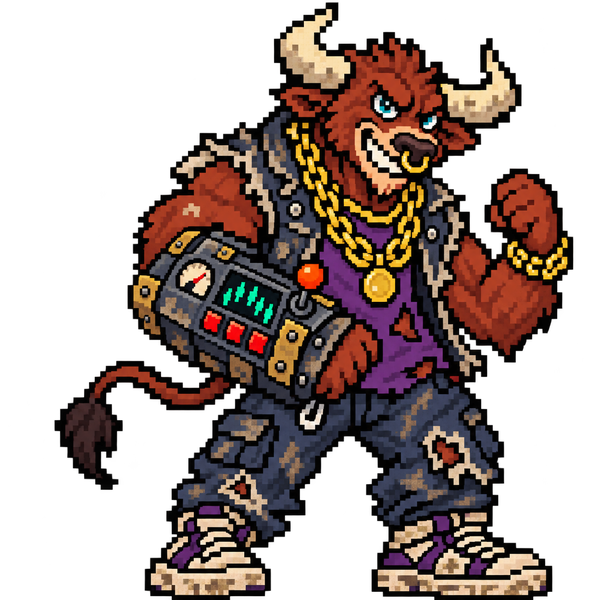
BULLISH, the Bull
Only knows forward.
Bullish escaped a rodeo by simply refusing to stop running. He ran through three towns, a wedding and the lobby of a stock exchange, and nobody ever caught up. He has never once walked backwards. He married a bear, which everybody said was a mistake, and everybody was right: she left with the house, the dog and half of everything he owned. He still sends her flowers every spring. The gold chains are his rodeo bells, melted down. He wears forward like a religion.
“Up is a direction. I only know one.”
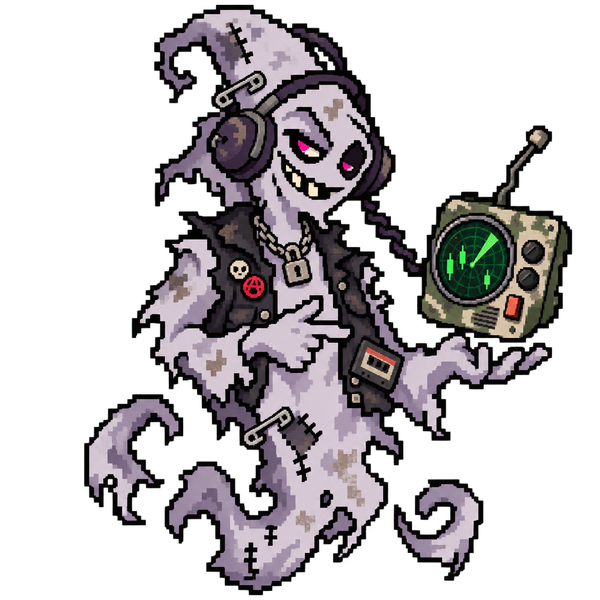
BOO, the Ghost
Still on air.
Boo used to host a night radio show with exactly one listener. During a storm, lightning struck the transmitter while he was mid-sentence, and his voice simply stayed in the air. Now he is mostly signal and a little bit of sheet, held together with safety pins and stubbornness. Through his headphones he hears every conversation the city has ever had. He is careful, almost tender, because he has already lost the only thing he had: one night his listener stopped tuning in.
“Somebody out there is still listening. I’m sure of it.”
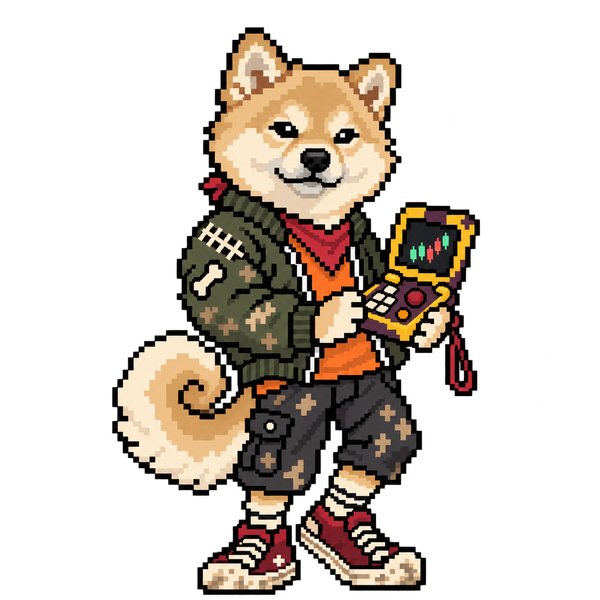
INU, the Shiba
Unbothered since forever.
Inu comes from the most famous dog family in crypto, the one whose face ended up on a thousand coins, mugs and questionable tattoos. While his cousins became celebrities, Inu went the other way. He spent four years in a mountain monastery that only accepts animals who have been memed at least once, and there he learned to sit. Really sit. Now he lives on the street with a folding computer and a paper cup of coffee that somehow never gets cold. Chaos happens around him like weather. He nods at it politely.
“Everything is temporary. Except me.”
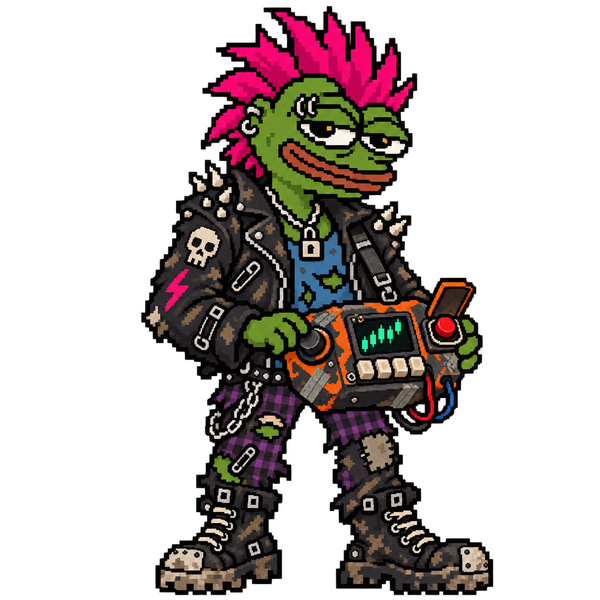
MOSH, the Frog
Louder is better.
Mosh drummed for The Rug Pulls, a punk band that played forty-one gigs, all of them in the same laundromat. When the bassist vanished with the van, the money and Mosh’s girlfriend, Mosh smashed his drum kit and rebuilt it, piece by piece, into the orange controller he carries now. The big red button used to be his crash cymbal. He is loud, he is loyal, and he has never once read the instructions for anything.
“If nobody’s dancing, play it louder.”
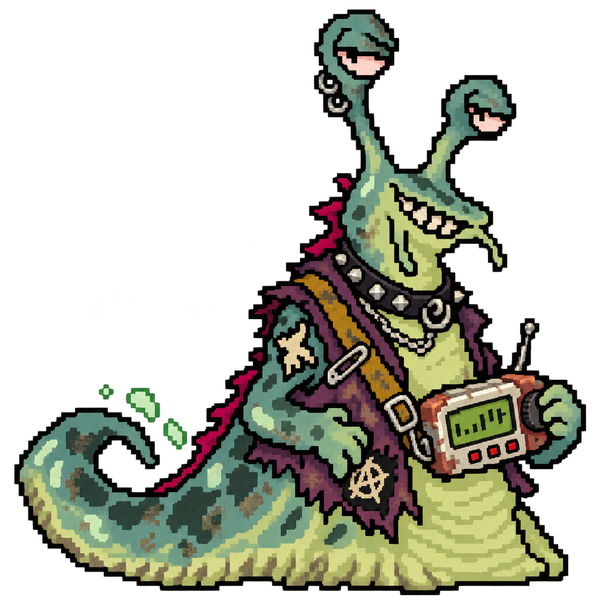
GOO, the Slug
Here before the street.
Goo is the oldest resident of Slippage Street. He was here before the street had a name, before the arcade, possibly before the city. He has outlived four landlords, two floods and one meteor, mostly by never being in a hurry. His pager from 1997 still beeps whenever someone, somewhere, makes a terrible decision, and he answers every one eventually with a single word: “noted”. The silver trail he leaves behind glows in the dark, and lost things have a way of turning up along it.
“I was going to panic, but I never got around to it.”
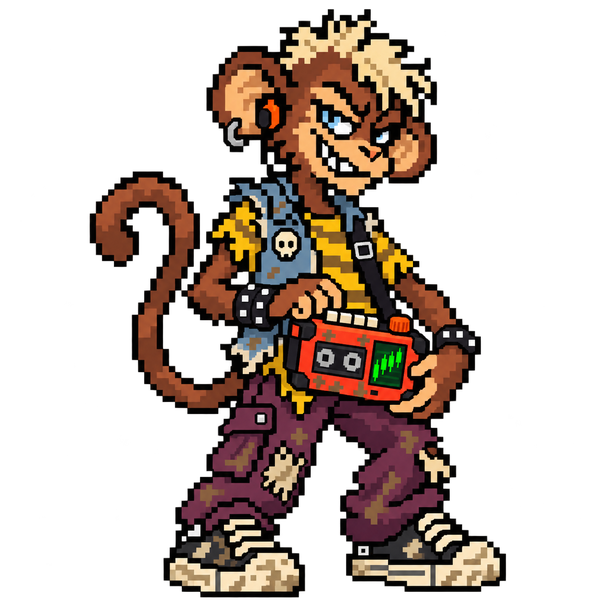
BOOMBOX, the Monkey
Born by the INSERT COIN light.
Boombox was born inside the arcade, literally: his mother had him behind the RIVAL cabinet during a power cut, by the light of the INSERT COIN sign. He grew up on dropped quarters and other people’s high scores. The red cassette player belonged to the night guard, who left one morning and never came back. The tape inside has been recorded over so many times that now it only plays the sound of the city breathing. Boombox still waits for the guard. In the meantime, he dances.
“If you stop moving, the night wins.”
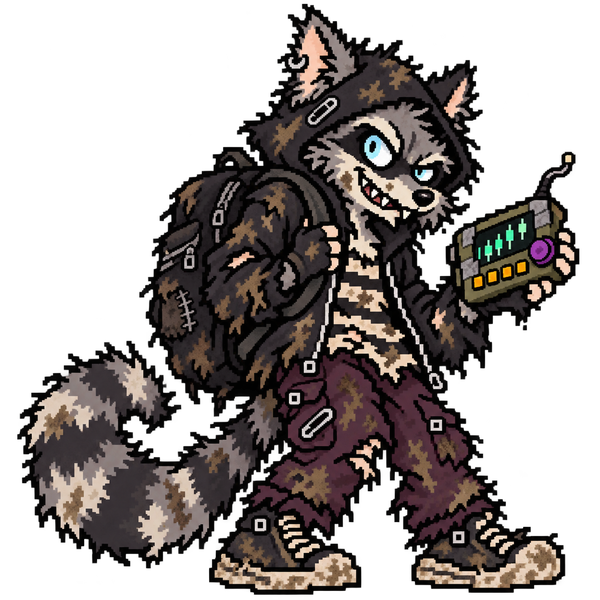
SKIM, the Raccoon
Nothing is ever lost.
Skim was raised in the garbage behind a five-star restaurant, which gave him expensive taste and no manners at all. He believes nothing is ever really thrown away, only misplaced, and he has built a life out of finding it: lost keys, unclaimed fortunes, love letters nobody sent. His scanner is a stolen baby monitor that picks up whispers from the other side of walls. He trusts no one, and that has never once been a mistake.
“Nothing is lost. It’s just not mine yet.”